Systems Sized for Actual Cooling Demand
AC installation in Concord for properties requiring properly matched equipment and balanced airflow distribution
The installation of air conditioning begins with an accurate assessment of your home's cooling load, factoring in square footage, insulation quality, window orientation, and typical occupancy patterns. Lamarche Heating & Air provides air conditioning system installations in Concord, Manchester, and Hooksett, ensuring comprehensive load calculations that consider New Hampshire's summer humidity and the heat gain prevalent in homes with southern or western exposures. Oversized units tend to short-cycle, failing to effectively remove humidity, while undersized systems operate continuously without achieving the desired temperatures.
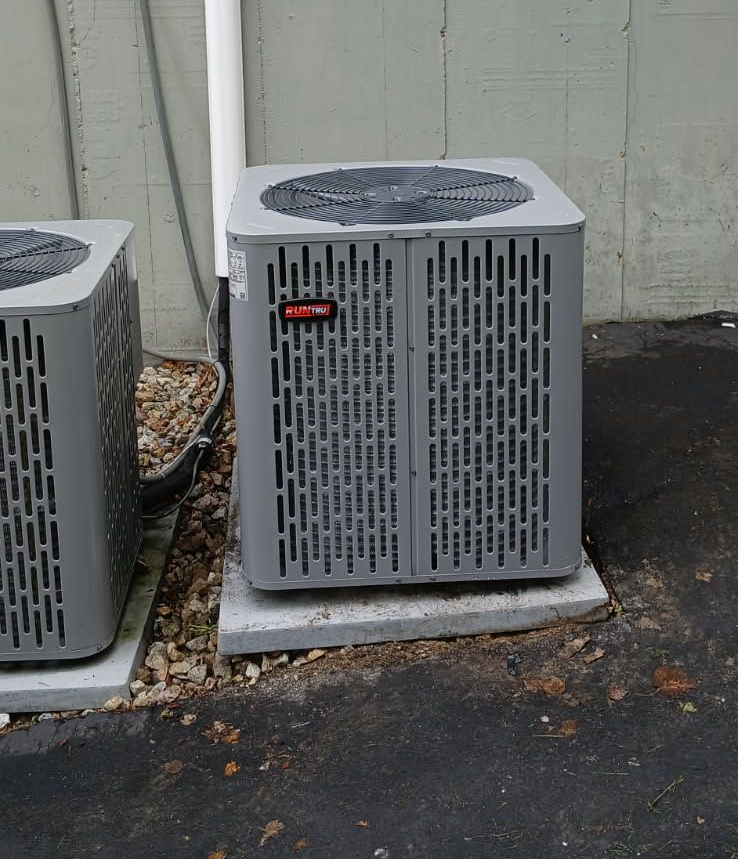
The installation process includes placing the outdoor condensing unit on a level base, securing the indoor evaporator coil within the existing furnace plenum or air handler, connecting refrigerant lines between the units, and establishing electrical service along with condensate drainage. It is crucial that the refrigerant charge aligns precisely with the manufacturer's specifications—any deviation can impair efficiency and potentially damage the compressor. Balancing the airflow ensures that each room receives proper cooling based on its size and heat load.
Schedule an on-site consultation to discuss equipment sizing, placement options, and any necessary ductwork adjustments to achieve optimal system performance.
Signs It May Be Time for AC Replacement
Multiple signs indicate that your current system has reached a stage where replacement is more practical than ongoing repairs. If your air conditioner is between ten to fifteen years old, it probably operates at a SEER rating considerably lower than that of modern equipment, resulting in higher monthly bills for the same level of cooling. Frequent repairs—particularly related to compressors or coils—suggest that key components are failing, leading to more breakdowns down the line.
Soaring utility bills despite consistent usage patterns suggest your system is laboring harder to deliver less cooling, often due to compressor wear or refrigerant problems that impair heat transfer efficiency. Inconsistent cooling, where some areas remain comfortable while others feel warm, indicates airflow issues or inadequate system capacity. If your system still relies on R-22 refrigerant, upgrading will help you avoid the rising costs and dwindling availability of this phased-out refrigerant. Systems that struggle during peak summer temperatures—running constantly without achieving thermostat settings—are either undersized or have lost efficiency due to component wear.
Furthermore, new installations offer a chance to incorporate modern refrigerants, enhanced filtration, and variable-speed technology that adjusts output based on real-time demand instead of cycling on and off repeatedly. Homes in Concord and Manchester built prior to recent energy codes can greatly benefit from equipment designed to address the challenges posed by older construction methods and limited insulation.
Questions Before Starting Your AC Installation
Homeowners in the Hooksett and Manchester area typically want to understand what installation involves and how equipment choices affect long-term performance.
How is the correct system size determined for my home?
Load calculation accounts for total conditioned square footage, ceiling height, insulation R-values, window area and orientation, ductwork layout, and typical occupancy. This calculation produces a tonnage requirement that guides equipment selection.
What happens if the new system is larger than the old one?
Increased capacity may require upgraded electrical service, larger refrigerant line sets, and modifications to the evaporator coil housing or plenum. Ductwork may also need resizing to handle higher airflow volumes without creating noise or pressure imbalances.
Why does installation take more than one day in some cases?
Complex installations involving ductwork modifications, electrical panel upgrades, or challenging equipment placement extend beyond single-day timelines. Homes in Manchester and Concord with older infrastructure or limited access to mechanical spaces often require additional preparation work.
What maintenance does a new system require?
Annual inspections should include refrigerant pressure checks, coil cleaning, condensate drain clearing, electrical connection tightening, and airflow measurement. Filter replacement frequency depends on system type and household conditions but typically ranges from every one to three months during cooling season.
When is the best time to schedule installation?
Spring installations, completed before peak summer demand, allow time to address any adjustments needed for optimal performance. Installing during the shoulder season also provides more flexible scheduling and ensures the system is fully operational before the first heat wave arrives in June or July.
Lamarche Heating & Air handles air conditioning installations throughout Concord, Hooksett, and Manchester with load-matched equipment selection and verified refrigerant charging. Contact us to review system options, installation requirements, and performance expectations based on your home's specific cooling needs and existing infrastructure.